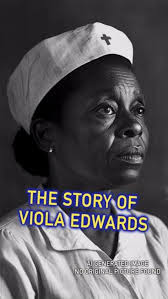
Remembering Viola Edwards and Pensacola’s Lost Black-Owned Hospital

A quiet morning in Pensacola’s Belmont-DeVilliers neighborhood gives little hint of the history once rooted there. A century ago, these streets were the heart of the city’s Black community—filled with businesses, churches, music halls, and a hospital whose story nearly disappeared with time.https://weartv.com/amazing-america/remembering-viola-edwards-and-pensacolas-lost-black-owned-hospital
In 1922, Viola Edwards opened Pensacola’s first known Black-owned hospital. College-educated and professionally trained as a nurse, Edwards built and operated a medical facility dedicated to caring for people of color in a deeply segregated South, where access to healthcare was often denied or nonexistent. At a time when Black women had few rights or opportunities—and just years after women gained the right to vote—her work was both bold and revolutionary.

The hospital served the community with dignity and compassion, offering care regardless of race, gender, or circumstance. But in 1927, its legacy was forever altered. After a tragic and controversial case involving the death of a pregnant white woman, Edwards was charged with manslaughter. Though she was ultimately acquitted, her hospital was burned before the trial even concluded. Some suspected involvement by the Ku Klux Klan, though no proof was ever established.
The destruction of the hospital marked the end of a critical institution in Pensacola’s Black community. Edwards later left the city and rebuilt her life in Detroit, where she continued serving others as a nurse through public health crises, including tuberculosis.
Today, no photographs of the hospital are known to exist. Its memory survives through research and storytelling, led in part by cultural historian Robin Reshard, founder of the Kukua Institute, who has even brought Edwards’ story to life through opera.
This is more than a forgotten building. It is a story of Black entrepreneurship, women’s leadership, community care, racial injustice, resilience, and survival. It reminds us that history is not always preserved in stone—but in truth, memory, and the courage to tell the full story: the good, the painful, and the hard lessons in between.
A century later, Viola Edwards’ legacy still matters—and deserves to be remembered.