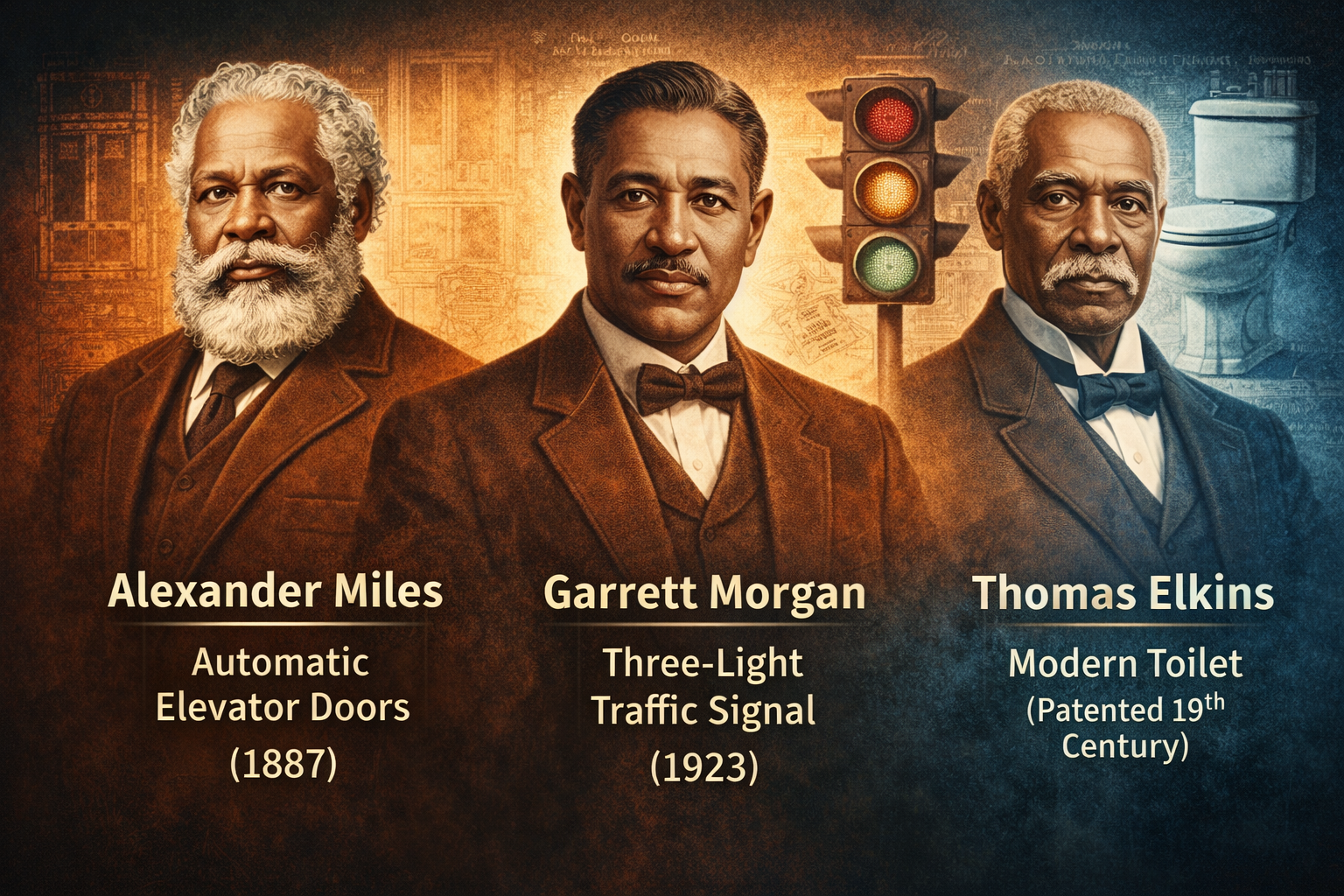
I recently watched an MSN news report honoring the contributions of Foundational Black Americans, and it was both powerful and necessary. The segment highlighted not only the broad cultural and economic impact of generations past, but also specific innovators whose work still shapes our daily lives.
The news anchor mentioned Alexander Miles, who patented improvements to automatic elevator doors in 1887—an innovation that dramatically improved passenger safety. It also recognized Garrett Morgan, who invented the three-light traffic signal in 1923, a development that transformed roadway safety and traffic control worldwide. The report further acknowledged Thomas Elkins, whose work on the modern toilet system advanced sanitation and public health.
These examples are reminders that Foundational Black Americans have been central to advancements in infrastructure, safety, engineering, and public health—often without receiving the recognition they deserved at the time.
What stood out most in the report was its emphasis on legacy. Not just major milestones, but the everyday resilience, intelligence, and determination that built systems we still rely on today. Honoring these contributions is about truth and acknowledgment. It’s about ensuring that history reflects the full scope of those who helped shape the nation.
Stories like these matter. They educate future generations, preserve cultural memory, and affirm that innovation and excellence have always been part of the Foundational Black American story.