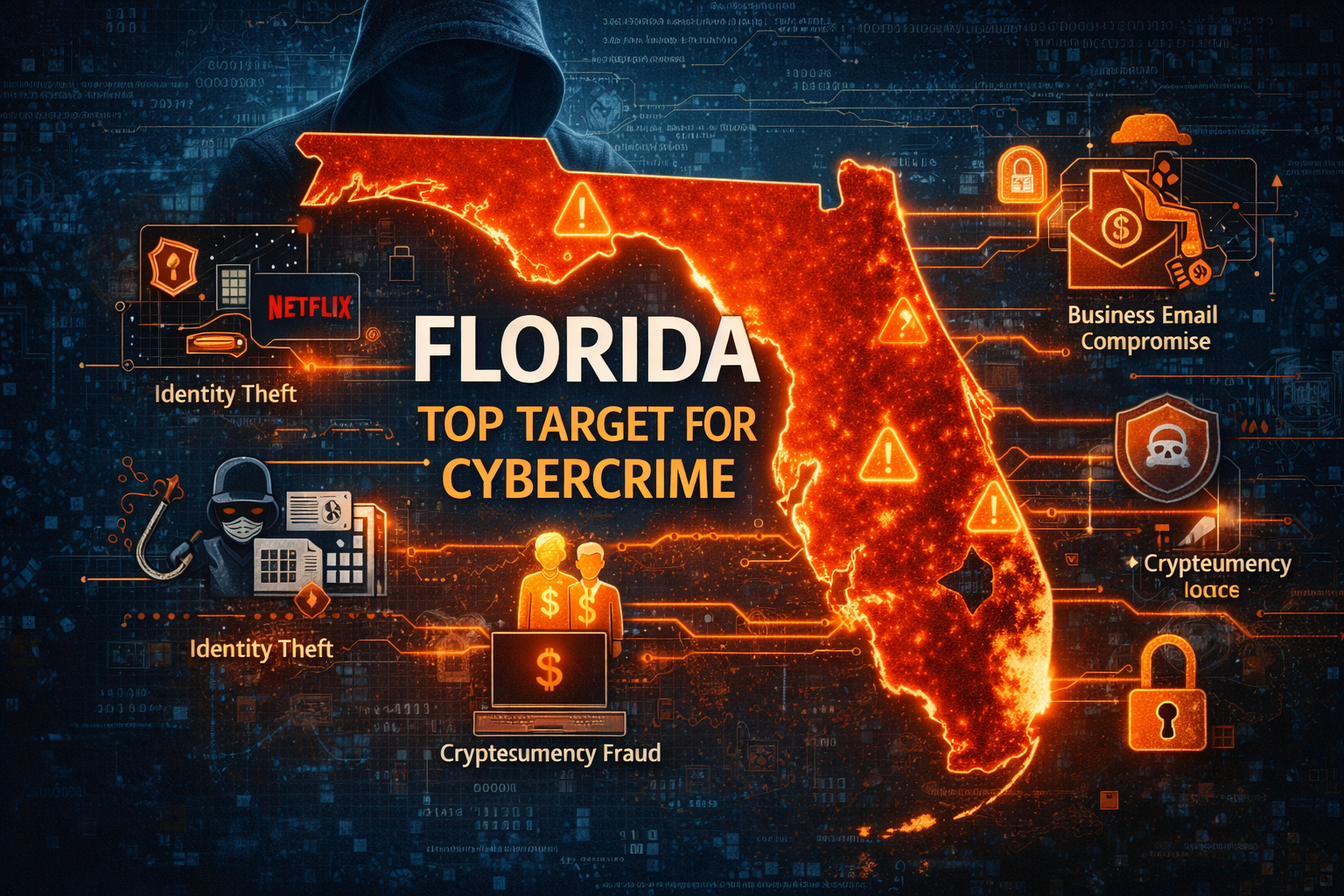
Florida continues to rank among the most targeted states for cybercrime in the United States. In recent years, more than 42,000 Floridians have reported losses exceeding $844 million, placing the state second nationally for cyber-related financial damage. These numbers highlight the growing sophistication of digital threats and the importance of awareness at both the individual and business levels.
Some of the most common cybercrimes affecting Florida residents include identity theft and financial fraud, where criminals steal Social Security numbers, banking details, or credit card information to open fraudulent accounts or drain funds. Florida consistently ranks high in these categories.

Phishing scams are also surging, particularly fraudulent emails impersonating streaming services like Netflix and Hulu. These messages are designed to trick users into entering login credentials, payment information, or other personal data on fake websites.
Business Email Compromise (BEC) attacks are especially costly. In these schemes, criminals impersonate executives or vendors to trick companies into wiring large sums of money. Losses from BEC incidents can exceed $62 million annually in some reporting periods. Real estate transactions and financial services firms are frequent targets.
Another growing threat is cryptocurrency fraud, which accounts for a significant share of reported monetary losses. Seniors are often disproportionately targeted through investment scams or fake crypto opportunities promising unrealistic returns.
Additional concerns include cyberstalking and online harassment, as well as computer hacking, where attackers gain unauthorized access to systems to steal sensitive data or deploy malware.
The Florida Department of Law Enforcement (FDLE) investigates these offenses, and depending on the financial damage involved, charges can range from first-degree misdemeanors to first-degree felonies — with penalties of up to 30 years in prison for the most serious cases.
🛡️ Prevention and Protection Tips:
• Keep antivirus, operating systems, and applications updated
• Use strong, unique passwords for every account
• Enable multi-factor authentication (MFA) wherever possible
• Verify wire transfer requests and financial instructions independently
• Be cautious of urgent or unexpected emails asking for personal information
If you suspect you’ve been targeted, report incidents to the FDLE Computer Crime Center, file a complaint with IC3.gov, and notify Secure Florida immediately.
Cybercrime is evolving — but awareness, vigilance, and proactive security habits remain the strongest defenses.